

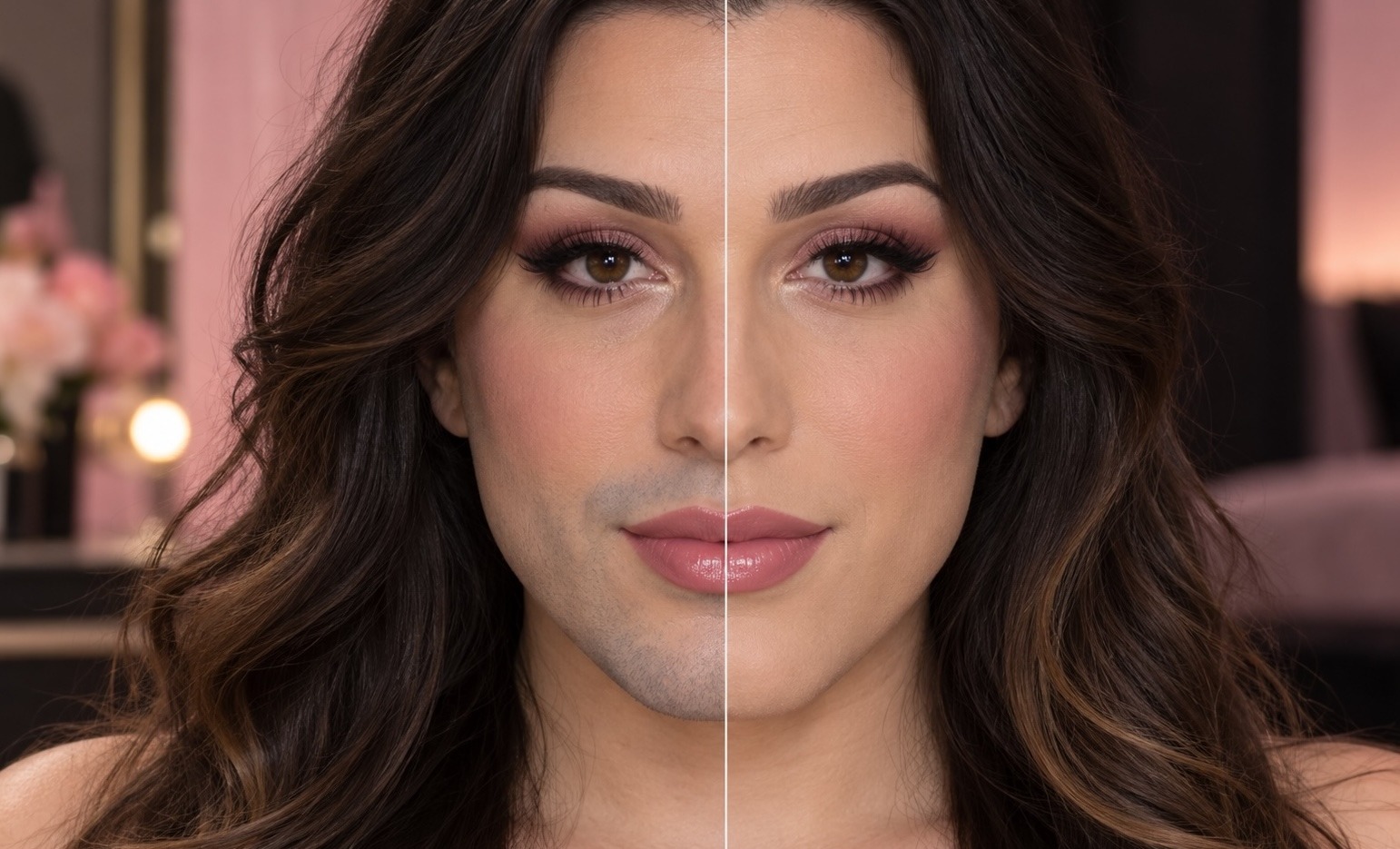
Still seeing beard shadow showing through makeup after you shave? Correcting the grey or blue tone before adding coverage can make a bigger difference than another thick layer of foundation. Here’s how to choose a corrector, keep it in place, and cover the shadow without piling on makeup.
In this article, we’ll cover:
- Shaving and skin prep
- Choosing a color corrector
- Setting with powder
- Applying foundation
- Fixing patchy results
You’ve shaved, applied your foundation, and checked the mirror. Then you spot a grey tint around your upper lip or chin. If you have beard shadow showing through makeup, piling on more foundation usually makes the area look heavier without fixing the color underneath. A close shave helps with texture, but it can’t always remove the dark appearance of hair beneath the skin. That’s why the order of your makeup matters.
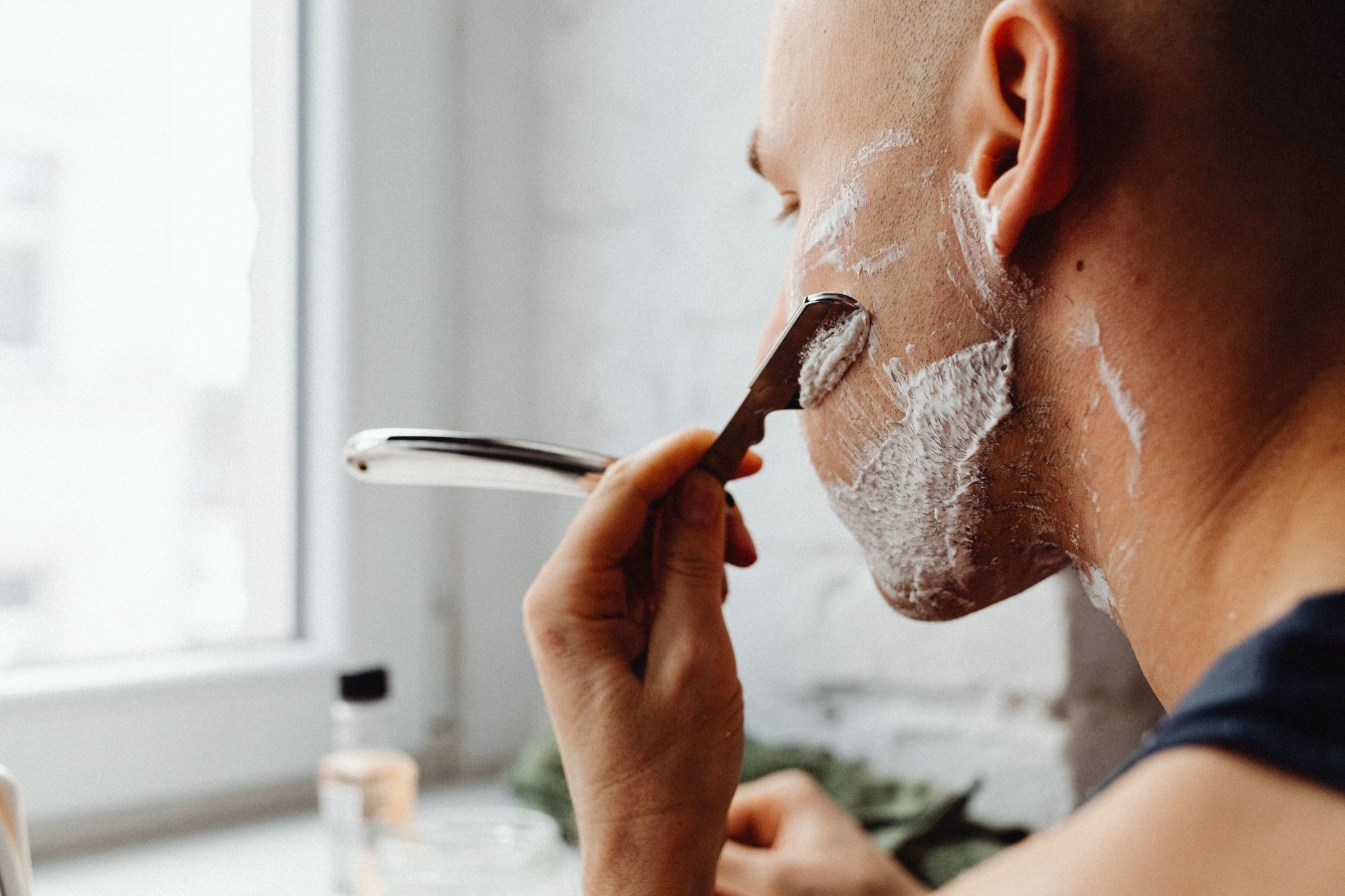
First, get as smooth a shave as your skin allows
Shave with a clean, sharp razor and take your time around the chin and upper lip. Don’t keep going over irritated skin to chase a perfectly smooth finish. Once you’re done, rinse, moisturize and give your skin a chance to settle before applying makeup. If you use primer, apply a light layer after your moisturizer.
You’re aiming for a comfortable surface for makeup to sit on. Corrector can help with the color of shadow, but it won’t flatten visible stubble.
Which color corrector covers beard shadow?
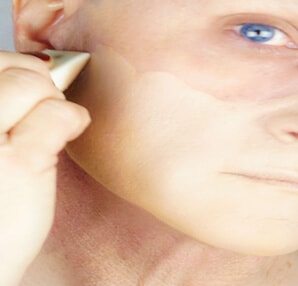
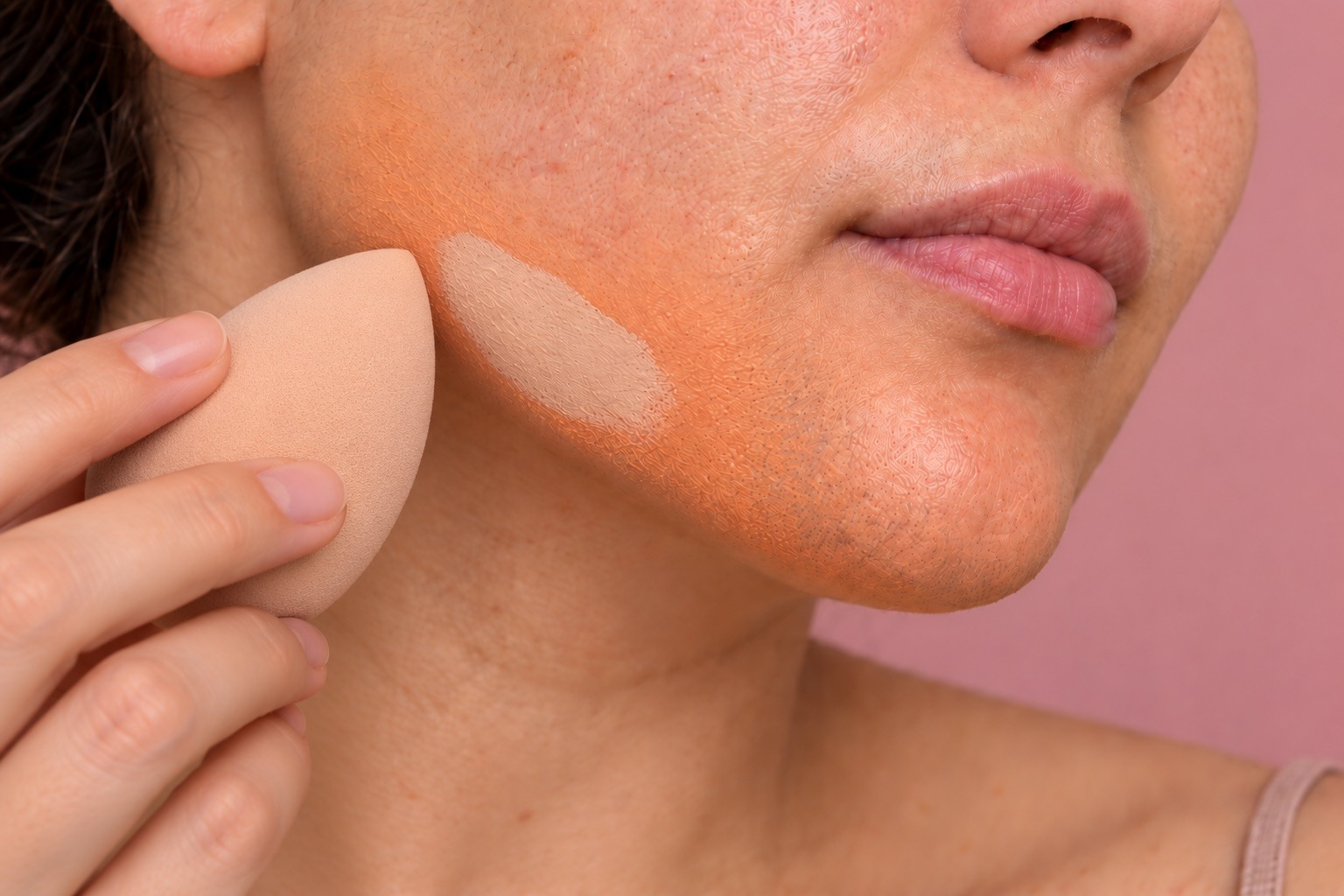
The best color corrector for beard shadow is one that softens the particular color you see on your face. Blue or grey shadow often responds well to peach or orange. A lighter peach may look more natural on fair skin, while a deeper orange or red-orange may be more useful on deeper skin. Try a small patch along your jaw in daylight before covering the whole area.
An orange color corrector for beard shadow should go only where you see the discoloration, usually the upper lip, chin, or jaw. Use a brush, sponge, or fingertip to place a small amount, then tap the edges until they fade into your skin. You don’t need an opaque orange mask. If the corrector is still strongly visible after foundation, use less next time or try a different shade.
Our Cream Stick Neutralizer is a reddish orange cream designed to sit beneath foundation. Its stick format makes it easy to place on the areas that need it, but apply it lightly.
Before you add foundation, press a small amount of translucent setting powder over the corrector with a soft brush or powder puff. This sets the corrector so it’s less likely to move when you blend foundation on top. Keep the powder layer light; too much can make the finished makeup look dry or thick.
Press on coverage instead of wiping away the corrector
The next step is coverage that matches your skin. Apply a cream concealer or foundation over the area. Many of our customers prefer cream formulas here because they offer more coverage without needing several coats. Match the shade to your face and jaw, rather than choosing a much lighter color in the hope that it will hide the shadow.
Apply the product, then tap it in with a makeup sponge. Press gently rather than dragging the sponge across your face. Dragging can lift the corrector you just applied. Start with a thin layer, check it in daylight, and add a little more only where you can still see shadow.
If you’re looking for a full coverage cream foundation for beard shadow, our High Pigment Foundation is a cream formula that can be built up where you need it. When customers ask us about the best foundation to cover beard shadow, we always point out that shade and application matter just as much as coverage: foundation works better after you’ve corrected the grey or blue tone. Blend the edges into the rest of your makeup so the lower half of your face doesn’t look like a separate shade.
If the shadow still shows, check these three things
- It looks grey: You may need a different corrector shade, or you may have applied too little to the darkest spots. Test a small area before changing your whole routine.
- It looks orange: The corrector may be too strong for your skin tone, or you may have used too much. Try a lighter peach or a thinner layer.
- It looks patchy or thick: Give your moisturizer time to settle, use less product at each step and press with a sponge instead of rubbing. If your skin is irritated from shaving, let it calm down first.
Finish with a light dusting of setting powder, pressed gently over the covered areas. Then check your makeup in natural light. Bathroom lighting can hide a patch you’ll notice as soon as you step outside.
Getting beard shadow showing through makeup under control may take a little practice. Once you know which color corrector works for you, the routine is simple: shave gently, correct the shadow, set it, press on cream coverage, and set it again. If you’re building your kit, browse our beard cover makeup for correctors, foundation, and blending tools!
Do you get a smoother finish with a makeup sponge or a brush? What part of covering beard shadow gives you the most trouble? We’d love to know what you think! Email us at [email protected] or message us on our Facebook page. And be sure to check out more great tips and articles on our blog!